Against the Ice

“As much as we search after those spiritual highs, that sense of peak connection to God, and I still think we should, we cannot always attain them. And to feel empty and disappointed in those numerous moments when we are left down on the ground, decidedly uninspired, well – what then? But no- it is not all about highs. The bread and butter of one’s relationship with God, like one’s relationship with one’s spouse and children, is daily devotion, a sense of steadfastness – standing there through thick and thin, through the dry days and the high days and the low days, but still being there to make the lunches and say the brachot (blessings). It is a relief that sometimes all God wants of me is simply to show up, to be my small uninspired self in His presence, to show my devotion through emptiness and humility as well as through passion and intense emotion. “

Rachel Anifeld, Parsha Thoughts and More

Amen and Amen. Amen for Your blessings inspiring me throughout this work thus far, and Amen for blessing me with the persistence to continue and to complete it.

Koren Tehillim, Psalm 41 Commentary

The year is 1909. The movie, Against the Ice, opens with a dog sled crossing an expansive sea of ice and snow with two men, arriving to a makeshift hut where they meet a team of men who step into swift action, providing medical aid and comfort to Jorgensen who needs amputation. An instant later we are celebrating at a Christmas meal, acknowledging the lives lost and the sacrifices the explorers have made to finish the mission of the Denmark Expedition. You can feel the relief in the men as their exhaustion pours out of them and their imaginations are already returning them to the embrace of home. They believe they are finished only to hear the Captain pronounce at the end of his toast, “We’re half way there.” One can imagine their hearts stop at the sound of that phrase – “We’re half way there” – their minds crossing into despairing confusion as they listen to the Captain share that he and Jorgensen retrieved a map on the remains of the explorers in the last expedition. This map points to the cairn that holds the sought after treasure; it holds the essential documentation recorded on the expedition into this unknown region of the world. And so, and so, the Captain went on, they needed to go “further” and “cross the ice cap” to retrieve the findings left behind.” It is this “halfway” point that reveals who has the calling to explore the unknown and trek in the icy wilderness for at least another year.

“We’re not going home then?” one man replies, which seems to be the reply for all.

The Captain returns with some astonishment, “This is why we are here boys. Without these findings the North agreement could be lost, claimed by the Americans. Now, Jorgensen is incapacitated. Now I can’t do it alone. Which provides one of you lucky boys with a once in a lifetime opportunity. I’ll need a volunteer to accompany me.”

Iver Iverson, a wide-eyed and 25 year old zen mechanic, with no previous experience as an arctic explorer, was the only volunteer. In the film he is portrayed as the innocent figure with idealism matched by a true spirit of reverence to his Captain, his teacher, along with something else in particular. He is the gentle “simple” one who is perceived as the “fool.” He is the “simple” childlike figure who is perceived as childish, dooming the expedition. He is the “simple” figure that intrinsically knows not only how to “show up” in any condition but also how to practice lashon tov (good speech), a profound act of “devotion through emptiness and humility as well as through passion and intense emotion….. standing there through thick and thin, through the dry days and the high days and the low days, but still being there to make the lunches and say the brachot (blessings).”

Ivan is the redeeming figure, the conscious feminine, the union of masculine and feminine. He has what Suzuki calls “imperturbable composure,” the still point always close and accessible, the light that brings ships in from the storm. He walks in Truth and speaks it only at the most opportune time for mutual survival, for continuing on the wings of creative flux whose plans elude us…completely. His movement leaves no trace, leaves nothing extra behind. No malice, no regret, no gloom, no doom. Just being. Pure essence.

Ivan seems to stand comfortably in Holy sorrow, holding the raw tension of the opposites held in life and death as he grieves the loss of his beloved dog who he named. His dog initiates him across a threshold, never the same, accompanying him with each subsequent sacrifice, made again and again, never easier, always for the lives of the pack until the pack is altogether gone.

Ivan seemingly stands comfortably in Holy imagination, Holy possibilities that lie just beyond the reach of his Captain’s eye that occasionally catches a glimpse here and there, a spark of hope arriving on a mirage or two or even mustard seeds of gratitude. As conditions become fiercely untenable and the Captain shows signs of madness, Ivan becomes the container for them both….never giving up….until it is finished….and “all is well” arrives at their door. The Captain remembers.

Who is he? Is he you? Is he me?

Is he the original face of humans?

The Captain remembers.

While it may seem otherwise, forgetting is more difficult than remembering.

Forgetting requires a body impervious to ecstasy,

remembering requires only a fleeting kiss from a beloved.

Forgetting demands a heart hard and brittle,

remembering requires only a moment’s cry of joy.

Forgetting requires constant denial of God,

remembering requires only a moment of surrender.

Forgetting demands ceaseless hiding from the Other,

remembering requires only an accidental meeting.

Rabbi Rami Shapiro, Pirke Avot, Ethics of the Sages, 3:10 Commentary

Welcoming Death & Birth

Let me not to the marriage of true minds admit impediments,

Love is not love

Which alters when it alteration finds,

Or bends with the remover

to remove.

Shakespeare, Sonnet 116

There lies within a great objective Love, constant and true only to itself. The syllabi for this truth is held in one’s life experiences, each one connected to a divine well no matter how ordinary, dull, messy, ugly, or cruel. As we mature we know, more and more but never completely, that the journey to knowing this Love is “hard and steep” with many deaths and sorrows, never complete, unfinished til our last breath, the final act. It takes the bold strength of faith, born of seeing at least one of those moments honestly with the heart, to hold the uncertainty of incompleteness amidst many attractive and opposing impediments that promise sweet relief and feel oh so right for reasons yet unknown, revealed slowly over time through sorrow’s gate.

We come to know, more and more, how we ourselves admit myriad impediments, at a quickening pace, spiraling toward death, over and over and over again. Death interrupts, stopping and slowing the cacophony of impediments careening toward it as the moth to the flame, inviting us each time to bow to the emptiness of loss, however it is born.

Death comes in many forms throughout our short lives and from all directions, inviting us to bow to pure sorrow that arrives or is born, not made or conjured. We are invited to bow, not to the sorrow born out of an idea, manufactured or possessed, disguising fear, doubt and selfish impediments in holy dress. No, no, no. The sorrow I am speaking of arrives from Mystery alone, compassionately aware of fear, doubt and selfish impediments lying in the mix, Mystery weeping for us and with us, always, calling for our return home, awakening the map engraved in our hearts at birth.

Sorrow is a form of ultimate Love that slows the quickening pace breaking our backs, our hearts, our bodies, our spirit. Sorrow turns our paper thin and childish understanding into a diamond, toward a mature relationship with Love, a mature relationship toward Life where we become children rolling out of our center, free, joyful, and dancing. Sorrow is the west wind that carries us Home to Amor. Sorrow is the fire that burns away impediments, a hundred moth wings. Sorrow is the wing of God that shelters us from the unreal. Sorrow is Joy, unmasked.

This love “feeds on faith”, strong confidence that grows with each observed sorrow held in a contemplative container. Such containers hold the still point and the movement. Their design, their principles are always the same architecturally, simple and ordinary: be still and silent, without hope, without thought, without love. Daily sitting practice – bowing to stillness, silence, and the breath of life – is the repetitive movement that raises real consciousness. In the waiting, the impediments rise up. It is painful to witness. In the waiting, the impediments slow down, cool and evaporate. In the waiting Mystery enters revealing new understanding. In the waiting a mustard size seed of humility is planted in the heart by Her, releasing boulders from the heart….changing the world, one breath at a time, one moment at a time, into the hidden matrix of All.

Strawberry Varieties: The Complete Guide (Updated 2022)

I said to my soul, be still,
and wait without hope
For hope would be hope for the wrong thing;
wait without love,
For love would be love of the
wrong thing; there is yet faith
But the faith and the love and
the hope are all in the waiting.
Wait without thought, for you
are not ready for thought:
So the darkness shall be the
light, and the stillness the
dancing.
Whisper of running streams,
and winter lightning.
The wild thyme unseen and the
wild strawberry,
The laughter in the garden,
echoed ecstasy.
Not lost, but requiring, pointing
to the agony
Of death and rebirth

T.S. Eliot. East Coker

The stillness….of reverence…opening the gates of Joy.

The stillness opening the gates for the children…

Gran Torino | Female.com.au

Walt sits, in the movie Gran Torino, knowing that when impediments flood, the stillness is All. Trained by battle. Trained by sorrow. He waited. Still. In silence. He heard, from the silence, the sacrifice to be made that returned life to the children, the next generation.

May be a closeup of 1 person

Your Struggle Is Sacred

Monkey Bars

Seven years old.

Seven times she fell on the second rung, never looking around for those who saw.

Seven times she rose and turned to stand in line again, her eyes never leaving the bars.

And then suddenly, all at once, she swung to the third rung and then the whole way through, reaching the end, like it was nothing at all.

I wept and smiled all at once, never the same. Stretched.

She smiled and walked on.

“A righteous person will fall seven times but will rise. They are not righteous because they rise despite their fall; rather, they are righteous because they rise from their fall…. and because of how they bounce back, walk through frailties, through temptations, mistakes, etc. The beinoni will never be the spiritual superstar who is holy by nature. The beinoni is a gritty, get your hands dirty, spiritual role player who can say, ‘Am I going to be tempted by this? Yes. Am I going to be distracted by that? Yes. Am I going to fall? Yes.'” – Joshua Sussman

We can waste our whole lifetime not falling and never live,

Feverishly accessing safety and control and never live,

Seamlessly polishing our personal “brand” to be worshipped and never live,

Powerfully controlling others to align with our own image and never live,

Continuously receiving affirmation and never live,

Grotesquely enjoying victory in vengeance and never live,

Sickeningly gaining wealth and never live…

Even for a moment.

Maybe.

The effort engaged in a single moment of rising from a fall from grace, anguishing despair, or real hardship is the “divine substance” of character that transforms the world, whether we know it or not. Some of us have seven of these moments. Others have 7×70 or 7×700. We’re likely not to know how many because it is so organic, so ordinary to our original face of kindness and beauty.

The characters in the Maid and Mare of Easton inspire us for this reason, they show “gritty, get your hands dirty, ordinary, spiritual role players” who never deny temptation, distraction, or falls and never stop rising to be a “role player” for the child, the parent, the student, the co-worker, the friend, the teacher, the community. These characters are undoubtedly in each of our lives, playing a supportive role in inviting us to our ordinary moment of rising out of ash, witnessing our becoming…real, a continuous, never-ending adventure.

Maid (TV Mini Series 2021) - IMDb

“Single mother Alex turns to housecleaning to make ends meet as she escapes an abusive relationship and overcomes homelessness to create a better life for her daughter, Maddy”

Mare of Easttown - HBO Limited Series - Where To Watch

“Mare Sheehan, an office police investigator in a small Pennsylvania town, investigates a brutal murder as she tries to keep her life from falling apart.”

HBO Series

What Is Your Calling?

Photographer: Sasin Tipchai

Here in the wilderness,

On your journeys of becoming,

Draw close to me.

Feel your strength,

Call forth your humility,

And set an intention to align yourself with the Highest Will.

Remember that your life is a gift

And everything you are

And everything you have been given

Is yours to share.

Make your life an offering,

And draw close to me.

Give thanks.

Offer gratitude for the bounty and blessings.

Look for opportunities to be grateful.

Acknowledge moments of well-being.

Engage in forgiveness.

Acknowledge the hurt and pain you have caused

And let this awareness guide you

In seeking healing and repair.

Practice compassion and understanding.

Let it release you from anger, resentment and regret.

In every moment, the Mystery proclaims, I am here. Draw Close.”

Rabbi Yael Levy, Callings in Directing the Heart

“Like a moth to a flame”…..we innocently and willingly go into the wilderness of the unknown and the next forty plus years, if we are so blessed, we spend searching for our way back home. Some of us are more “prepared” to meet the difficulties of the wild, to cast their “everything” light on the world, remembering… the voice that says, “I am here, draw close, align yourself with the Highest Will” and know your strength.

Every word of wisdom, from all traditions, carries within it the All, the cosmos. Practices and rituals birth from the words out of the solar plexus of people desiring the peace of Home. Wisdom creates endless portals opened by our offerings of humility, vulnerability, blessings, mistakes, forgiveness, penance, doubts, and deeds. Every word, until resonance is found, is like a tuning fork waking the soul, a well of living water replenishing a dried out spirit, a fountain of youth that resurrects what has died, manna in the desert where our deepest longing becomes known through our affliction, a fire that burns away “a hundred moth wings a night”, a sword and shield, a compass and map… All are portals calling us home.

So much to discover and reconcile along the way. So much to tame, for out of our impatience we have birthed hundreds of moth wings, out of our fatigue we drank the liquor and “kool-aide”, out of our isolation and hopelessness we took bites out of our souls, out of our loneliness, naivete and sympathies we have wed to liars and thieves dressed as messiah’s, priests, rabbis, and buddhas.

The greatest hidden secret is that when we see our impatience as impatience, our loneliness as loneliness, the liars and thieves as liars and thieves, how lost and powerless we are, we come out into a clearing and hear from the depths of our interior…. the Mystery proclaim, “I am here. Draw close.” Robert Frost’s refrain, “miles and miles to go before I sleep” comes alive and you are awestruck by it all unfolding in you, seeing the grandeur, the gift, of “everything” comprising this adventure of your life … for the first time.

Learn who the person is who longs for life,     Who loves days of seeing good

Psalm 34:12 Songs of Ascension by Rabbi Levy
These woods are lovely, dark and deep, But I have promises to keep, And  miles to go before I sleep, And miles to go before I sleep. Robert Frost

Zelensky Winks

President Zelensky’s seventeen second message on March 9th comes with an assuring wink. He doesn’t assure survival of the body as they are all clearly willing to endure hardship and die for freedom, for Truth. He assures us of the survival of human integrity, of our very souls in this fight against evil. I watch again now to see his wink at the end to release my exhale and prayers to God who is in this battle with them, for us.

In Psalm 31:21-22, the poet sings and reassures us: You have secreted [your children] in the secret places of Your presence, Away from unsavory people’s plotting; You have hidden them in a sukkah away from arguing tongues. Blessed is Adonai Who has revealed the wonders of Your covenantal love Within the rocky fortress of my city.

All the lives lost the the lives in battle for Justice are secreted away in God’s presence, hidden and safe, eternal. May our collective weeping etch their memories in our hearts forever that we never return to this wretched bind ever again.

The Light Shining Through

“I said: what about my eyes?

He said: Keep them on the road.

I said: What about my passion?

He said: Keep it burning.

I said: What about my heart?

He said: Tell me what you hold inside it?

I said: Pain and sorrow.

He said: Stay with it. The wound is the place where the Light enters you.”

Rumi, 13th Century Sufi mystic, Islamic scholar, Persian poet, Maturidi theologian

The Reversal Is Real: Wait Without Hope

How has the “reversal” shown up in your life?

I said to my soul, be still, and wait without hope
For hope would be hope for the wrong thing; wait without love,
For love would be love of the wrong thing; there is yet faith
But the faith and the love and the hope are all in the waiting.
Wait without thought, for you are not ready for thought:
So the darkness shall be the light, and the stillness the dancing.
Whisper of running streams, and winter lightning.
The wild thyme unseen and the wild strawberry,
The laughter in the garden, echoed ecstasy
Not lost, but requiring, pointing to the agony
Of death and birth.

T. S. Eliot, East Coker

God’s presence is there in front of me, a fire on the left, a lovely stream on the right.  One group walks toward the fire, into the fire,  another toward the sweet flowing water.  No one knows which are blessed and which not.

Whoever walks into the fire appears suddenly in the stream. A head goes under on the water surface, that head pokes out of the fire.

Most people guard against going into the fire, and so end up in it. Those who love the water of pleasure and make it their devotion are cheated with this reversal.

The trickery goes further. 

The voice of the fire tells the truth saying, I am not fire. I am fountainhead. Come into me and don’t mind the sparks.

If you are a friend of God, fire is your water. You should wish to have a hundred thousand sets of mothwings, so you could burn them away, ONE SET A NIGHT.

The moth sees light and goes into fire.  You should see fire and go toward light.

Fire is what of God is world-consuming.  

Water, world-protecting.

Somehow, each gives the appearance of the other.  To these eyes you have now, what looks like water burns. What looks like fire is a great relief to be inside.  

You’ve seen a magician make a bowl of rice seem a dish full of tiny, live worms. Before an assembly with one breath he made the floor swarm with scorpions that weren’t there.

How much more amazing God’s tricks! 

Generation after generation lies down, defeated, they think, but they’re like a woman underneath a lover, circling.

One molecule-mote-second thinking of God’s reversal of comfort and pain is better than any attending ritual. 

That splinter of intelligence is substance.
The fire and water themselves: accidental, done with mirrors.  

The Question, by Rumi, translated by Coleman Barks with John Moyne in The Essential Rumi

Life Saving Wells Come In Many Forms: Waltzing to Unexpected Tunes

Are you prepared to waltz to unexpected tunes? or still setting fires to landscapes?

“If your pain is great enough and your longing for it to end great enough, a response will come. We need to listen hard, and to watch carefully. Life-saving wells can come in many forms, and we might need to try waltzing to unexpected tunes.”

Rabbi Richard N. Levy, Commentary for Psalm 30 from Songs Ascending, The Book of Psalms

Whether we understand or not, we are guided to express our need outwardly to our Creator, who is pointed to with many names but in truth is beyond naming. Rumi’s poetic storytelling mirrors for us the invisible dance of crying out, seeking the living well. In his story of The King and the Handmaiden and the Doctor he brings in sage advice, echoed throughout time in the scriptures of all religions, as I understand them, to include an explicit declaration that the knowledge lies beyond your reach, the tune beyond your comprehension. It is through our trembling awe and sorrow that we open the portal to Mystery where we can absorb the reality that we are lying in a “bed that is too small to stretch out in and the blanket is too small to wrap [us].” (Isaiah 28). The King, in Rumi’s story cries out to Allah saying:

“You know what’s hidden here. I don’t know what to do. You have said, ‘Even though I know all secrets, still declare it outwardly with an action.'”

He cried out loud for help, and the ocean of grace surged over him. He slept in the midst of his weeping on the prayer rug.

In his dream an old man appeared.

“Good king, I have news. Tomorrow a stranger will come. I have sent him. He is a physician you can trust. Listen to him.”

As dawn came, the king was sitting up in the belvedere on his roof. He saw someone coming, a person like the dawn. He ran to meet this guest.

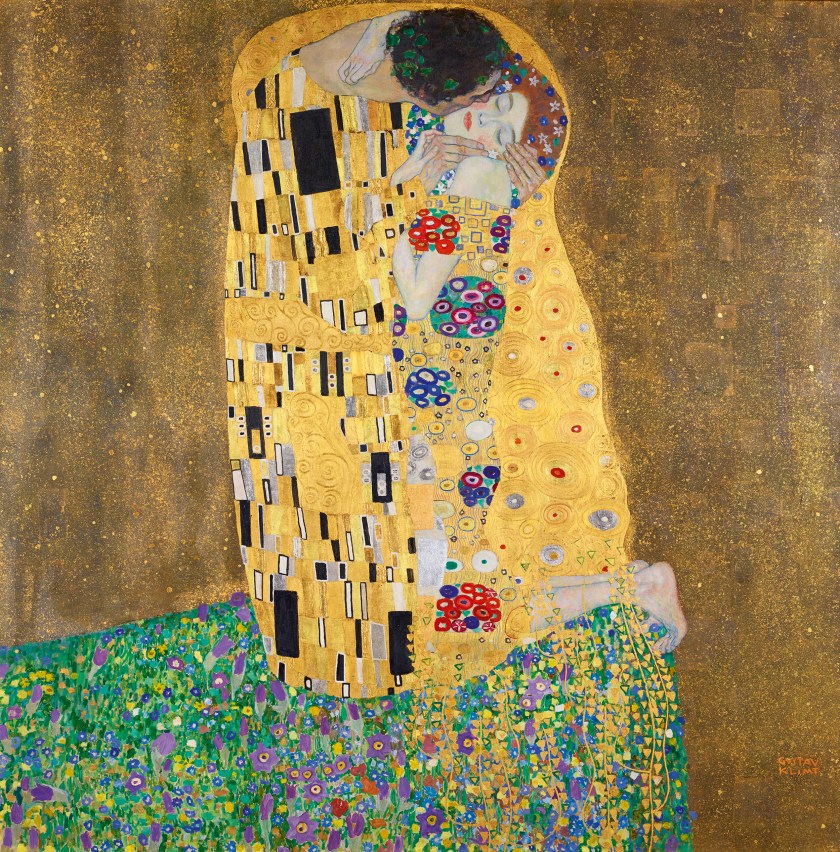
Like two swimmers who love the water, their souls knit together without being seen, no seam.

The Kiss by Gustav Klimt | Belvedere Museum Vienna

Like two swimmers who love the water, their souls knit together without being seen, no seam.

The king said, “You are my beloved, not the girl! But actions spring from actions in this reality. What should I do?”

We should always ask for discipline. One who has no self-control cannot receive grace. And it’s not just himself he hurts. Undisciplined people set fire to the landscape!

Little Fires Everywhere' reminds us microaggressions are incendiary

At last, I have found what patience can bring. This one whose face answers any question, who simply by looking can loosen the knot of intellectual discussion.

You translate what is inside us. If you were to vanish, this vast meeting room would shrink to a closet. Protect us.”

Rumi, The King and the Handmaiden and the Doctor, from The Essential Rumi, translations by Coleman Barks with John Moyne.

“Like a Moth to a Flame”

Small emperor moth (Saturnia pavonia) female with wings (Photos Prints,...)  #15301614

In the age of innocence, from infancy to 100, there is a moth within that is drawn to the flame, sometimes setting our whole house on fire! Such is the way. In spiritual practice we “learn to see fire and go toward light,” to recognize ourselves when we are “like a woman underneath a lover, circling,” to understand the paradox that Rumi calls “God’s reversal of comfort and pain” that is “the splinter of intelligence” that is “substance,” and “better than any attending ritual.” Is ritual not just a mirror reflection of the way leading us to awaken to this paradoxical Truth? this beautiful splinter?

A verse from The QUESTION by Rumi:

If you are a friend of God, fire is your water.

You should wish to have a hundred thousand sets of mothwings, 

so you could burn them away, ONE SET A NIGHT.

Of course, the statement “if you are a friend of God” can make all of us, at some point in our life, wobble for a variety of reasons. One reason may be that we have internalized and memorialized messages that run opposite to the truth that God is our friend, that God is, that God is merciful, that God is beyond our understanding, always pulling us through the labyrinth of our heart to know love and forgiveness, to realize freedom and beauty.

Reaching Out

Saratoga Battlefield

Where might I go to find You, Exalted, Hidden One?

Yet where would I not go to find You, Everpresent, Eternal One?

My heart cries out to You: Please draw near to me.

The moment I reach out for You,

I find You reaching in for me.

-Mishkan T’filah, A Reform Siddur