

With each reliable return to practice, the intellect imitating what is written on the score, one slowly melts into the still point of Mystery, in union with Will. Bursts of grace enter unexpectedly for a moment, dispersing any awkwardness of clunky fingers working through frozen rhythms in unknown spaces. The eye of the intellect falls into the deepest rest as it is ravished awake in delight at the new arrival. Suddenly…”all is well” arrives and the song plays the student, the student the song.
Author: DrRachel
Rachel Magnell, Ph.D. is studied in Counseling Psychology, Neuroscience, Jungian Depth Psychology, Hypnosis, Yoga Philosophy and Meditation.
Despair and Mercy
Despair enters when when we know the full depth of dis-honour and cannot seek, nor credit, G-d’s Mercy.
– C.S. Lewis, Screwtape Letters
You must put it right.
Courage
“[G-d] sees as well as you do that courage is not simply one of the virtues, but the form of every virtue at the testing point, which means, at the point of highest reality. A chastity or honesty, or mercy, which yields to danger will be chaste or honest or merciful only on conditions. Pilate was merciful till it became risky.”
Your Affectionate Uncle Screwtape,
– from Screwtape Letters by C.S. Lewis
Engaging Screwtape Letters by C.S. Lewis

The threads woven through all our readings have been the strands of our human condition viewed through the lens of mythology, of psychology, of prayer, of ritual, and now the lens of satire. Each lens sheds light on a different angle of the elephant, inviting us to experience the “awe at our own ignorance and our inability to ever get things right” (Sara Regina Ryan). Once that elephant is adequately realized, our human adventure begins!
“I had to accept that what I had previously called my soul was not at all my soul, but a dead system. Hence I had to speak to my soul as to something far off and unknown, which did not exist through me, but through whom I existed.”
C.G. Jung
Each author in the Mystic Heart Series has provided a scaffolding for discerning the conscious from the unconscious, shadow from light, human from God, world from God, world from human, adaptation (ambitious) demands from spiritual demands, ego from Self, persona from Self or Soul, the archetypal from temporal. Each emphasizes the gift of awakening to our human condition, to Love, to interior freedom.
“In the gap between intention and outcome lies ubiquitous interruptions” (James Hollis). Coming to consciousness – awakening to our human condition, our human potential, our human nature – involves preparing to meet those interruptions with prepared intention, attention, and resolve built through experience in contemplative/reflective space and dialogue with the external. The aim is to move forward into wholeness (not goodness), awaken to our potential and realize interior freedom. Along the way we come to know what lurks in the shadows of our conscious experience and bring those shadows toward the light, toward the Soul’s Will.
In the Preface of his 2nd Edition of the Screwtape Letters, it reads
Readers are advised to remember that the devil is a liar. Not everything that Screwtape says should be assumed to be true even from his own angle.
There is wishful thinking In Hell as well as on earth.
Some have paid me an undeserved compliment by supposing that my letters were the ripe fruit of many years study of moral and ascetic theology. They forget that there is an equally reliable though less creditable way of learning how temptation works. My heart, I need no others, showed me the wickedness of the ungodly.
C.S. Lewis
As you read the Screwtape Letters consider preparing yourself to meet those wicked interruptions through contemplative active writing and write your own letter to Wormwood, in the voice of Screwtape, that reflects subtle experiences you have had of slowly falling into the gap between intention and outcome, away from the Presence, following Slubgob, Glubose, Slumtripet or Wormwood himself…or relying on your “will” alone or your sense of “will” that lies in the concentric circle of fantasy that Screwtape describes in Letter 6. For most, daily happenings can provide plenty of material! In your letter you may show how you befuddled the aim of Screwtape or how Screwtape continues to befuddle you, at least once or possibly many times through the troughs and peaks of life. The points in your letter may overlap with those in the book or not. As you read and/or write, capture a phrase (personal or extracted from the book) and write it on a piece of paper to reflect on. Use color and shape to express what is moving within you as you are reading/writing.
“Where Are You?” Asks Thomas Keating

A Telegram from the Heart
THE WORD
Down near the bottom
of the crossed-out list
of things you have to do today,
between “green thread”
and “broccoli,” you find
that you have penciled “sunlight.”
Resting on the page, the word
is beautiful. It touches you
as if you had a friend
and sunlight were a present
he had sent from someplace distant
as this morning—to cheer you up,
and to remind you that,
among your duties, pleasure
is a thing
that also needs accomplishing.
Do you remember?
that time and light are kinds
of love, and love
is no less practical
than a coffee grinder
or a safe spare tire?
Tomorrow you may be utterly
without a clue,
but today you get a telegram
from the heart in exile,
proclaiming that the kingdom
still exists,
the king and queen alive,
still speaking to their children,
—to any one among them
who can find the time
to sit out in the sun and listen.
~By Tony Hoagland, from Sweet Ruin, University of Wisconsin Press, 1992
NOTHING TO WEAR
It was just turning dawn when my journey began
And the road looked beautiful under the sky.
Don’t ask me what I’m taking, I have nothing
to wear
My bags are empty, and my hands are bare.
A light will be shining when I arrive
The evening star where music is heard.
On second thought, I’ll be wearing my ring
What more need I take to marry the king?
On The Shores of Eternity, Poems from Tagore on Immortality and Beyond, Deepak Chopra

Lectio Reading for Lent

Reading (Lectio)
Read the following Scripture two or three times.
John 8:1-11
Jesus went to the Mount of Olives. But early in the morning he arrived again in the temple area, and all the people started coming to him, and he sat down and
taught them. Then the scribes and the Pharisees brought a woman who had been caught in adultery and made her stand in the middle. They said to him, “Teacher, this woman was caught in the very act of committing adultery. Now in the law, Moses commanded us to stone such women. So what do you say?” They said this to test him, so that they could have some charge to bring against him.
Jesus bent down and began to write on the ground with his finger. But when they continued asking him, he straightened up and said to them, “Let the one among you who is without sin be the first to throw a stone at her.”
Again he bent down and wrote on the ground. And in response, they went away one by one, beginning with the elders. So he was left alone with the woman before him. Then Jesus straightened up and said to her, “Woman, where are they? Has no one condemned you?” She replied, “No one, sir.” Then Jesus said,
“Neither do I condemn you. Go, and from now on do not sin any more.”
Meditation (Meditatio) for 5th Week of Lent from Catholic.Bible:
After the reading, take some time to reflect in silence on one or more of the following questions:
• What word or words in this passage caught your attention?
• What in this passage comforted you?
• What in this passage challenged you?
“Our Lady” Day Homily by Pope Francis
What is the heart of Confession?
In the Gospel reading for today’s Solemnity, the angel Gabriel speaks three times in addressing the Virgin Mary.
The first is when he greets her and says, “Rejoice, full of grace, the Lord is with you” (Lk 1:28). The reason to rejoice, the reason for joy, is revealed in those words: the Lord is with you. Dear brother, dear sister, today you can hear those words addressed to you, to each one of us. You can make them your own each time you approach God’s forgiveness, for there the Lord tells you, “I am with you”.
All too often, we think that Confession is about going to God with dejected looks. Yet it is not so much that we go to the Lord, but that He comes to us, to fill us with His grace, to fill us with His joy. Our confession gives the Father the joy of raising us up once more. At the center of everything we believe, it is not about our sins.
This is the center of it: it is about His forgiveness.
Think about it: if our sins were at the heart of the sacrament, almost everything would depend on us; on our repentance, our efforts, our resolves. But no. He is the center of it. Far from it.
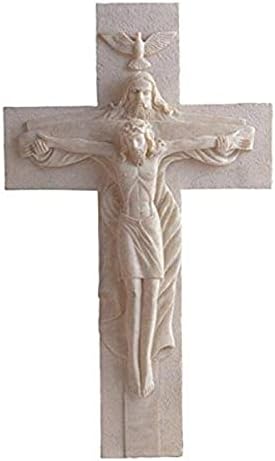
The sacrament is about God, who liberates us and puts us back on our feet.
Let us recognize once more the primacy of grace and ask for the gift to realize that Reconciliation is not primarily our drawing near to God, but His embrace that enfolds, astonishes and overwhelms us. The Lord enters our home, as he did that of Mary of Nazareth, and brings us unexpected amazement and joy.
Let us look at things from God’s perspective, then we will rediscover our love for Confession. We need this, for every interior rebirth, every spiritual renewal starts there, from God’s forgiveness.

May we not neglect Reconciliation, but rediscover it as the sacrament of joy. Yes, of joy.
For our shame, for our sins becomes the occasion for an experience of the warm embrace of the Father, the gentle strength of Jesus who heals us, and the “maternal tenderness” of the Holy Spirit. This is the heart of Confession.

And so, brothers and sisters, let us go forward to receive forgiveness. And you, dear brother priests who are ministers of God’s forgiveness, offer to those who approach you the joy of this proclamation: Rejoice, the Lord is with you! Set aside rigidity please, obstacles and harshness; may you be doors wide open to mercy! Especially in Confession, we are called to act in the person of the Good Shepherd who takes his sheep into his arms and cradles them.
We are called to be channels of grace that pour forth the living water of the Father’s mercy on hearts grown arid, dry. If a priest does not have this way of being, if he doesn’t have this feeling in his heart, it is better that he doesn’t go hear confessions.

A second time the angel speaks to Mary. She was troubled by his greeting, and so he tells her, “Do not be afraid” (v. 30).
The first was “Be not afraid, the Lord is with you.” In the Scriptures, whenever God appears to those who receive Him, he loves to utter those words: Be not afraid. He says them to Abraham (cf. Gen 15:1), repeats them to Isaac (cf. Gen 26:24), to Jacob (cf. Gen 46:3) and so on, up to Joseph (cf. Mt 1:20) and Mary. In this way, He sends us a clear and comforting message – once our lives are open to God, fear can no longer hold us in thrall. Because fear does that, it holds us hostage.
Dear sister, dear brother, if your sins frighten you, if your past worries you, if your wounds do not heal, if your constant failings dishearten you and you seem to have lost hope, please, be not afraid. God knows your weaknesses and is greater than your mistakes. God is greater than our sins, much greater. He asks of you only one thing- that you not hold your frailties and sufferings inside. Bring them to him, lay them before him and, from being reasons for despair they will become opportunities for resurrection. Be not afraid! The Lord asks for our sins.
I remember the story of the monk in the desert who gave everything to God. He had a life of fasting and prayer. And the Lord asked for more. He said, “Lord I have given you everything. What more can I give you?” The Lord says, “Give me your sins.” This is what the Lord asks of us. Be not afraid.
The Blessed Virgin Mary accompanies us: she cast her own anxiety upon God. The angel’s proclamation gave her good reason to be afraid. He proposed to her something unimaginable and beyond her abilities, something that she could not handle alone. There would be too many difficulties, problems with the Mosaic law, with Joseph, with the citizens of her town and with her people. Yet Mary did not reject. Those words – be not afraid – were sufficient for her; God’s reassurance was enough for her. She clung to him, as we want to do tonight.
Yet so often we do the exact opposite. We start from our own certainties and, when we lose them, we turn to God. Our Lady, on the other hand, teaches us to start from God, trusting that in this way everything else will be given to us (cf. Mt 6:33). She invites us to go to the source, to the Lord, who is the ultimate remedy against fear and emptiness in life. There is a lovely phrase written above the confessional here in the Vatican that reminds us of this. It addresses God with these words,
“To turn away from you is to fall, to turn back to you is to rise, to abide in you is to have life” (cf. Saint Augustine, Soliloquies I, 3).
“To turn away from you is to fall, to turn back to you is to rise, to abide in you is to have life” (cf. Saint Augustine, Soliloquies I, 3).
In these days, news reports and scenes of death continue to enter our homes, even as bombs are destroying the homes of many of our defenseless Ukrainian brothers and sisters. The vicious war that has overtaken so many people, and caused suffering to all, has made each of us fearful and anxious. We sense our helplessness and our inadequacy. We need to be told, “Do not be afraid”.
Yet human reassurance is not enough. We need the closeness of God and the certainty of his forgiveness, which alone eliminates evil, disarms resentment and restores peace to our hearts. Let us return to God and to his forgiveness.
A third time the angel speaks to Mary and says: “The Holy Spirit will come upon you” (Lk 1:35).
“The Lord is with you,” “be not afraid”, and the third thing he says is, “The Holy Spirit will come upon you.” This is how God intervenes in history: by giving his very Spirit. For in the things that matter, our own strength is not enough. By ourselves we cannot succeed in resolving the contradictions of history or even those of our own hearts. We need the wisdom and gentle power of God that is the Holy Spirit.
We need the Spirit of love who dispels hatred, soothes bitterness, extinguishes greed and rouses us from indifference. Spirit gives us harmony. He is harmony. We need God’s love, for our love is fragile and insufficient. We ask the Lord for many things, but how often we forget to ask Him for what is important, for what He desires most to give us: the Holy Spirit, the power to love.
Indeed, without love, what can we offer this world? It has been said that a Christian without love is like a needle that does not sew: it stings, it wounds, but if it fails to sew, weave or patch, it is useless. This is not a Christian. This is why we need to find in God’s forgiveness the power of love: the same Spirit who descended upon Mary.

If we want the world to change, then first our hearts must change.
For this to happen, let us allow Our Lady to take us by the hand. Let us gaze upon her Immaculate Heart in which God dwelt, “our tainted nature’s solitary boast”. For Mary is “full of grace” (v. 28), and thus free from sin. In her, there is no trace of evil and hence, with her, God was able to begin a new story of salvation and peace. There, in her, history took a turn.
God changed history by knocking at the door of Mary’s heart.
Today, renewed by God’s forgiveness, may we too knock at the door of her Immaculate Heart. In union with the Bishops and faithful of the world, I desire in a solemn way to bring all that we are presently experiencing to the Immaculate Heart of Mary. I wish to renew to her the consecration of the Church and the whole of humanity, and to consecrate to her in a particular way the Ukrainian people and the Russian people who, with filial affection, venerate her as a Mother.
This is no magic formula but a spiritual act.

It is an act of complete trust on the part of children who, amid the tribulation of this cruel and senseless war that threatens our world, turn to their Mother. Like children when they are scared, they run to their Mother seeking protection.
We give her all of their fears and pain in her heart, in abandoning themselves to her. It means placing in that pure and undefiled heart, where God is mirrored, the inestimable goods of fraternity and peace, all that we have and are, so that she, the Mother whom the Lord has given us, may protect us and watch over us.
Mary then uttered the most beautiful words that the angel could bring back to God: “Let it be done to me according to your word” (v. 38). Hers was no passive or resigned acceptance, but a lively desire to obey God, who has “plans for welfare and not for evil” (Jer 29:11). Hers was the most intimate sharing in God’s plan of peace for the world.
We consecrate ourselves to Mary in order to enter into this plan, to place ourselves fully at the disposal of God’s plans. After having uttered her “Fiat”, her Yes, the Mother of God set out on a long journey to the hill country, to visit a relative who was with child (cf. Lk 1:39). She went with haste and I like to think of the Madonna this way. The lady who hurries to come to assistance to protect us. May she now take our own journey into her hands. May she guide our steps through the steep and arduous paths of fraternity and dialogue, along the way of peace.
Ukraine and Russia to the Immaculate Heart of Mary
O Mary, Mother of God and our mother, in this time of trial we turn to you. As our mother, you love us and know us: No concern of our hearts is hidden from you. Mother of mercy, how often we have experienced your watchful care and your peaceful presence! You never cease to guide us to Jesus, the prince of peace.
Yet we have strayed from that path of peace. We have forgotten the lesson learned from the tragedies of the last century, the sacrifice of the millions who fell in two world wars. We have disregarded the commitments we made as a community of nations. We have betrayed peoples’ dreams of peace and the hopes of the young. We grew sick with greed, we thought only of our own nations and their interests, we grew indifferent and caught up in our selfish needs and concerns.
We chose to ignore God, to be satisfied with our illusions, to grow arrogant and aggressive, to suppress innocent lives and to stockpile weapons. We stopped being our neighbor’s keepers and stewards of our common home. We have ravaged the garden of the earth with war, and by our sins we have broken the heart of our heavenly Father, who desires us to be brothers and sisters. We grew indifferent to everyone and everything except ourselves. Now with shame we cry out: Forgive us, Lord!
Holy Mother, amid the misery of our sinfulness, amid our struggles and weaknesses, amid the mystery of iniquity that is evil and war, you remind us that God never abandons us, but continues to look upon us with love, ever ready to forgive us and raise us up to new life. He has given you to us and made your Immaculate Heart a refuge for the church and for all humanity. By God’s gracious will, you are ever with us; even in the most troubled moments of our history, you are there to guide us with tender love.
We now turn to you and knock at the door of your heart. We are your beloved children. In every age you make yourself known to us, calling us to conversion. At this dark hour, help us and grant us your comfort. Say to us once more: “Am I not here, I who am your Mother?” You are able to untie the knots of our hearts and of our times. In you we place our trust. We are confident that, especially in moments of trial, you will not be deaf to our supplication and will come to our aid.
That is what you did at Cana in Galilee, when you interceded with Jesus and he worked the first of his signs. To preserve the joy of the wedding feast, you said to him: “They have no wine” (Jn 2:3). Now, O Mother, repeat those words and that prayer, for in our own day we have run out of the wine of hope, joy has fled, fraternity has faded. We have forgotten our humanity and squandered the gift of peace. We opened our hearts to violence and destructiveness. How greatly we need your maternal help!
Therefore, O Mother, hear our prayer.


The Stars Look On
The day will come
When the sight of this earth will be lost
I will take my leave in silence
As the stars look on

I know the sun will rise again
The hours will still bring pleasure and pain
In heaving waves.

When I think of the end, time crumbles
I see by the light of death
That the lowliest existence is rare
And the worst moments are precious

What I longed for will be set aside
The things I pursued in vain -
Let them pass
Let me turn
To things I overlooked
And carelessly threw away
To possess them truly until they are mine

As the stars look on.

- a poem from Tagore, On the Shores of Eternity, Poems from Tagore on Immortality and Beyond.