Kierkegaard’s Corner: What does it mean to be God’s chosen one? to be a child of God? to “believe?”

#Faith, Mystery, #Secrets, #FountainofYouth. #Despair, #Existential, #poet, #hero, #love, #admiration, #guardianspirit, #poetandhero

Photographer Credit: Not found

From Kierkegaard’s work: Fear and Trembling

“If there were no eternal consciousness in a human being, if underlying everything there were only a wild fermenting force writhing in dark passions that produced everything great and insignificant, if a bottomless insatiable emptiness lurked beneath everything, what would life be then but despair? If such were the case, if there were no sacred bonds that tied humankind together, if one generation after another rose like leaves in the forest, if one generation succeeded another like the singing of the birds in the forest, if the human race passed through the world as a ship through the sea, as the
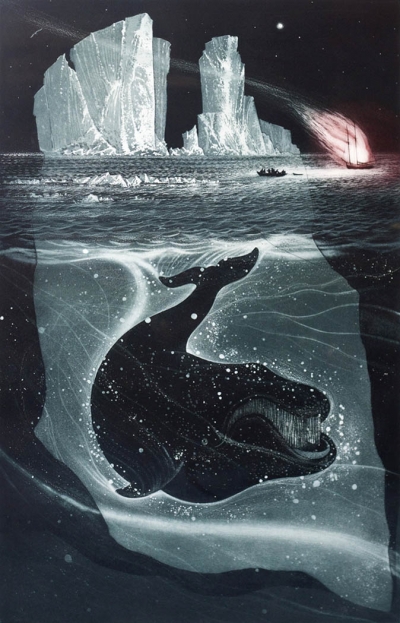
Blackwood.jpg

wind through the desert, a thoughtless and futile activity, if an eternal oblivion always hungrily lay in wait for its’ prey and there were no power strong enough to snatch it away, then how empty and hopeless life would be. But that is why it is not so. And as God created man and woman, so he fashioned the hero and the poet or orator. The latter can do nothing that the former does. He can only admire, love, and rejoice in the hero. Yet he too is happy, no less than the former. For the hero is, so-to-speak, his better nature with which he is infatuated yet delighted that it is, after all, not himself, that his love can be admiration.

He is the guardian spirit of recollection. He can do nothing without remembering what has been done, do nothing without admiring what has been done. He takes nothing for himself but is protective of what is entrusted to him. He follows his hearts desire but when he has found what was sought he wanders about to every man’s door with his song and speech so that everyone may admire the hero as he does, be proud of the hero as he is. This is his achievement, his humble task, his faithful service in the house of the hero.

If he remains true to his love in this way, if he struggles day and night with the cunning of oblivion which wants to trick him out of the hero, then he has fulfilled his task. He is united with the hero who has loved him just as faithfully. For the poet is, so to speak, the hero’s better nature, feeble like a memory to be sure, but also glorified like a memory. Therefore, no one who was great will be forgotten. And even if it takes a long time, even if a cloud of misunderstanding whisks the hero away, his lover still comes. And the more time goes by, the more steadfastly he clings to him.

No, no one who was great in the world will be forgotten. But each was great in his own way and each in proportion to the greatness of what he loved. For the one who loved himself became great by himself. And the one who loved other persons became great by his devotion. But the one who loved God became greater than everybody. Each will be remembered, but each became great in proportion to his expectation.

One became great by expecting the possible, another by expecting the eternal. But the one who expected the impossible became greater than everybody. Each will be remembered but each was great wholly in proportion to the magnitude of that with which he struggled. For the one who struggled with the world became great by conquering the world and the one who struggled with himself became greater by conquering himself. But the one who struggled with God became greater than everybody. Thus there was conflict in the world, man against man, one against a thousand. But the one who struggled with God was greater than everybody. Thus there was conflict on the earth.

There was the one who conquered all by his power, and the one who conquered God by his powerlessness. There was the one who relied on himself and gained everything and the one who, secure in his own strength, sacrificed everything. But the one who believed in God was greater than everybody. There was the one who was great by his power, and the one who was great by his wisdom, and the one who was great by his hope, and the one who was great by his love, but Abraham was greater than everybody. Great by that power whose strength is powerlessness, great by that wisdom whose secret is folly, great by that hope whose form is madness, great by that love which is hatred of ones’ self.

By faith, Abraham emigrated from the land of his father’s and became a foreigner in the Promised land. He left one thing behind and took one thing with him. He left his worldly understanding behind and took faith with him. Otherwise, he undoubtedly would not have emigrated but surely would have thought it preposterous. By faith he was a stranger in the promised land and there was nothing that reminded him of what was dear to him. But his soul was tempted to wistful nostalgia by the novelty of everything. And yet, he was God’s chosen one in whom the Lord was well pleased. In fact, had he been a castaway, banished from God’s grace, he could have understood it better. But now, it certainly seemed like a mockery of him and his faith.

There was also in the world one who lived in exile from the world, from the ancestral land which he loved. He is not forgotten nor are his songs of lamentation when in sadness he sought and found what was lost.

From Abraham there is no song of lament. It is human to lament, human to weep with the one who weeps but it is greater to believe, more blessed to behold the believer. By faith, Abraham received the promise that in his seed all the generations of the world would be blessed.

Time passed, the possibility was there, Abraham believed. Time passed, it became preposterous, Abraham believed.

There was one in the world who also had an expectation. Time passed, evening drew near. He was not wretched enough to have forgotten his expectation; therefore, neither will he be forgotten. Then he sorrowed and the sorrow did not cheat him as life had done. It did everything it could for him. In the sweetness of sorrow he possessed his disappointed expectation. It is human to sorrow. It is human to sorrow with the sorrowing one but it is greater to believe, more blessed to behold the believer.

From Abraham, we have no song of sorrow. He did not mournfully count the days while time passed. He did not look at Sarah with suspicious eyes as to whether she had not become old. He did not halt the movement of the sun so that Sarah would not grow old and with her his expectation. He did not soothingly sing for Sarah his mournful melody. Abraham became old. Sarah became the object of ridicule in the land. And yet, he was God’s chosen one and heir to the promise that in his seed all the generations of the earth would be blessed. So would it not have been better, after all, if he were not God’s chosen one.

What does it mean to be God’s chosen one? Is it to be denied one’s youthful wish in youth so that it may be fulfilled with great pains in old age? But, Abraham believed and held on to the promise. If Abraham had waivered, then he would have given it up. He would have said to God, “Well, perhaps it is not your will after all that it should happen so I will give up the wish. It was my only wish. My blessedness. My soul is sincere. I harbor no hidden resentment because you denied it.” He would not have been forgotten.

He would have saved many by his example but still would not have become the father of faith. For it is great to give up one’s wish but it is greater to keep a firm grip on it after having given it up. It is great to lay hold of the eternal but it is greater to stick doggedly to the temporal after having given it up.

Then came the fullness of time. If Abraham had not believed, Sarah might well have died from sorrow and Abraham, dulled by grief, would not have understood the fulfillment but only smiled at it as at a youthful dream. But, Abraham believed. Therefore he was young. For the one who always hopes for the best, grows old, cheated by life. And the one who is always prepared for the worst, grows old prematurely. But the one who believes preserves an eternal youth.

So let us pay tribute to that story. For Sarah, though aged, was young enough to crave the pleasure of motherhood and Abraham, though grey haired, was young enough to wish to be a father. Outwardly, the wonder is that it happened in accordance with their expectation. In a deeper sense, the wonder of faith consists in Abraham and Sarah being young enough to wish, and in faith having preserved their wish and with it their youth.

He accepted the fulfillment of the promise. He accepted it in faith and it happened according to the promise and according to faith. For Moses struck the rock with his staff but he did not believe. So there was rejoicing in Abraham’s house when Sarah stood as a bride on their golden wedding anniversary but it was not to remain that way. Abraham was to be tried once more. He had fought with that ingenious power which invents everything, with that vigilant enemy which never dozes, with that old man who outlives everything. He had fought with time and kept the faith. Now, all the frightfulness of the struggle became concentrated in one moment. And God tested Abraham and said to him, “Take your son, your only son Isaac, whom you love, and go to the land of Moriah, and offer him there as a burnt offering upon a mountain that I will show you.” Thus everything was lost which is even more frightful than if it had never happened. So the lord was only mocking Abraham. Miraculously, he made the preposterous come true. Now he would see it brought to nothing again. It was indeed folly but Abraham did not laugh at it as Sarah had done when the promise was first proclaimed. Everything was lost. Seventy years of faithful expectation. The brief joy of a faith’s fulfillment. Who is it then, that snatches the staff from the old man, who is it that demands he himself must break it. Who is it that makes a man’s grey hairs disconsolate? Who is it that demands he himself must do it? Is there no compassion for this venerable old man? for the innocent child?”

A Particular Sorrow

Robert Zemeckis directs #TomHanks in the story Cast Away, written by William Broyles Jr.. He received a Golden Globe award for his poignant performance.

castaway wilson ball - Online Discount Shop for Electronics, Apparel, Toys,  Books, Games, Computers, Shoes, Jewelry, Watches, Baby Products, Sports &  Outdoors, Office Products, Bed & Bath, Furniture, Tools, Hardware,  Automotive Parts,
Wilson, Chuck Noland’s imaginary friend

As he reaches for Wilson, his imaginary friend, born in the isolation of his tragedy, his face made from the blood of Chuck Noland’s struggling hands trying to make fire … he fails to “save” him! Wilson swiftly fades into the distance on the ocean current and Tom brings the world with him to experience the depths of a particular sorrow. I imagine the audience…. utterly still, a pool of listening minds, hearts slowly breaking.

After viewing this scene, you may hear the whispers of Craig Wright’s play, The Pavilion:

“This is the way the universe begins. A raindrop (that isn’t really a raindrop) drops, like a word, “rain” drops, into a pool (that isn’t really a pool, more like a pool of listening minds), and tiny waves circle out in an elegant decelerating procession, -cession, -cession. Then, after a time, the pool of listening minds grows still.”

What is this particular sorrow that we are traveling on, remembering still? Still. Listening?

The Quiet That Weeps You

Star Facts: The Basics of Star Names and Stellar Evolution | Space

Rumi takes us on the odyssey of love in his poem Sublime Generosity. It begins…

“I was dead, then alive, Weeping, then laughing.

The power of love came into me,

and I became fierce like a lion, then tender like the evening star.”

see full poem in The Essential Rumi, translations by Coleman Barks with John Moyne.

When the extraordinary power of love enters the solar plexus the world is suddenly turned upside down. What was higher is now lower. What is lower, higher.

In love’s youth it is wild in its ferocity, moving in one direction – up, up, up toward the stars, “needing to be tied up” as it flies oh so close to the sun, swept in the ecstasy of seemingly transcending the deep hunger for being “enough” to survive in this wild world which is, in the beginning, indistinguishable from our deep hunger for being whole, Holy, One, Home. The trajectory of death that inevitably awaits is unimaginable from here where only Light is seen, flight is felt. We are, after all, really going down, down, down.

Appliance of science: What happens when you split an atom?

Later, once our husks of attachment are annihilated, surrendered, let go through experience …. fantasy and doubt become tangible, clear. You are their witness now, not just for everyone else to see. They are your children that have been playing in your back yard the whole time, unattended, waiting to be claimed.

The image of the lion and the evening star are replaced in the poem by a featherless, “plucked chicken,” “the fool.” From here, the yearning for wings like Yours or even yours is painfully strong, tempered now by something.

When He tells you that you are now the candle “for this assembly” you are aghast with confusion as you exclaim, “I am no candle! I am [nothing but] scattered smoke!” I am nobody, nothing. Vapor.

Abstract smoke misty fog on isolated black background. Texture overlays.  Design element. Stock Illustration | Adobe Stock

He calls you a teacher, a guide, and this seems somehow backward. Upside down?

Knowing everything in your heart, He removes your unspoken yearning to claim His or even his or her wings. “You already have wings, ” He says. You hear this but you do not understand … yet. “Don’t you remember?”, you ask, “They melted in the sun.”

McKees Mills Baptist Church » Under God's Wings

Later, you hear events say to you, “Don’t move. A sublime generosity is coming toward you.” And you listen. It feels like the first time you have ever truly listened. Every auditory hair of every cell in your body is standing now in full attention, ready. All wanting and need ceases along with their contradictory children. All sensory input stopped. The quiet makes you weep.

An old love says to you, “Stay with me.”

You say, “I will.”

The Paris Review - Where Does “In Like a Lion, Out Like a Lamb” Originate?
BRITON RIVIÈRE, UNA AND LION, NINETEENTH CENTURY.

And Mary weeps…you.

The Universal Path of Becoming

No photo description available.

“Three things make you worthy of a teacher: the capacity to listen in the beginning, the ability to question in the middle, and the courage to go your own way in the end.”

Rabbi Rami Shapiro commentary on the sage advice of Yehoshua ben Perachyah (2nd Century BCE) who walked with Jesus, in Pirket Avot 1:15

Listening to the teachers and teachings, asking questions, and finding our own way, in this order, may possibly be the universal path of receiving and following any timeless spiritual tradition grounded in Truth, Love, Awe, Wisdom, Justice. Each action — listening to the teachings, engaging the questions that rise from them, and courageously becoming the teaching in one’s ordinary daily walk — holds the still point inside of Mystery, keeps the light on. They are the three elements comprising the triangle of the student, they are the humility of beginner’s mind, they are the soil prepared for the Holy seed, the remnant making space for divine action.

Why is it so hard to listen to the teachings? listen and speak the questions? become the teachings? Answer: many reasons, too large to count. Can we find the path in a single lifetime, our “lifetime” that seems to go by in a day? If one is truly pondering these questions then one may see the ancient vision of Venus in the background, giving Psyche the trial of separating a pile of beans, peas, seeds, corn, barley, grains of all sorts….. by evening. How many hours till the evening of our life do we have to become the student, hear and ask the questions, and embody the teachings on our journey home?

Now, try reframing the question in terms of Kairos time, non-linear time, divine time. If you know what I am talking about you are graced by the kiss of infinity and you are laughing. The seeds are sorted and you are ready. I bow to you.

Cupid & Psyche, a tale told in art and alchemy: Chapter 8: Psyche's Tasks
Giulio Romano, Selection of the Cornseeds. ca.1528. Fresco. Salotto di Amore e Psiche, Palazzo del Te, Mantua, Italy. Available from: Artstor, http://artstor.org (accessed May 2, 2017).

Life In The Deeps Found in the Enough Middle Point

Arvo Part: Da Pacem posted by Sylvain Moore

May “enough” of us have “enough” courage today to bring our raw brokenness into the sanctuary of our inner life and come into the grand find of the ever-present chiasm where poetry and prose cross, where our deeds and prayers are strong enough to support awareness of the divine geometry supporting Life, supporting our Humanness. So much life in the deeps, waiting patiently for our return, the awakening that transforms everything into Beauty to behold and mission is no longer optional or up to interpretation.

This Little Light of Mine

What does it take for me to let “this little light of mine” shine?! She let’s it shine, she let’s it shine, she let’s it shine. Do we get in our own way??? Maybe.

There is a Survivor’s Guilt few of us talk about and even fewer realize. When we “survive” a spiritual battle, unsure if we should have, the “rightness” of being in this world remains under serious questioning, perpetual probation. This is a form of survivors guilt, a form of self-imposed ostracism. We are not quite….through.

Maimonides (1138–1204) related the rules of ostracism, self imposed or otherwise, usually 30 days, a full cycle of the moon, a cycle of mourning. Strikingly, if one dies before the ostracism is lifted (by self, the courts, or three others on the request of the ostracized), the ostracized is denied a eulogy and a stone is placed on the casket representing the stoning of ostracism. How many of us would have the stone on our casket if we died today? How many of us are unsure of how to let the light shine or are still in the fire of Hashem?

May those in that fire today feel the living hope that lies in the flames, knowing all is well, knowing that good is everlasting and wickedness dies, in body and memory. Good always prevails. Life is eternal. This news can be found in a sunrise, a mountain, a tree, a bird song, a rose. It can be found everywhere and anywhere, especially in the flames consuming us.

Are You Surrounded By A Living Hedge?

How Do You Invest In Hedge Funds? – Forbes Advisor
On the labyrinth there is one way in and one way out.  

As we recite the Pirket Avot I imagine myself looking up from the feet of the ancient sages, the feet of Jesus Himself, hearing Him ask me, “Are you surrounded by My living hedge?” There was a time when I would have received this as a passive question invoking a positive but sentimental answer, inflated by a lack of experience or naivete. Fortunately that naivete broke and opened me to the deeper meaning. Now, I hear this question actively asking me if I am awake in continuous prayer to timeless truth, am I awake in service to timeless truth, am I awake in the study of timeless truth that has been painstakingly written down and lived for me? My answer is yes but, of course, I can do better. May I strive to be more like the ant who carries six times its own weight back to the communal nest.

This question can inspire great pride, great shame, rebellious and sometimes dangerous resistance, or deep humility. It reveals where we are in our readiness for the truth of our life and for our return home from wherever our reveries have broken us open or continue to break us open. It probes the heart where the cracks live, where our innocence is lost and our suffering and mortality is found, where idealism and sentimentality give way to realism, where words without experience have no power, where compassion and the hope of eternality beam light into the heart. This is precisely where the birth canal to the soul opens and requires constant compassionate midwifing to birth our souls slowly into the world and plant. When one is truly seated in humility with one’s regrets, remorse, and atoning heart, the words of the sages are a living hedge around the soul, gentle revelatory lights on the path that keep us moving forward into Mystery, into life, into love, into justice.

Garden of Truth

Was the Garden of Eden Located in Iraq? | Answers in Genesis

This summer I was called to learn how to play the harp. My lessons began at an old charming farm house on a hill overlooking a valley, surrounded by wildflowers, perennials and annuals waving in the sun. Upon entry into my teacher’s home one is immediately enveloped by a warm greeting and a vision of a community of harps amidst aqua stones.

On day one my teacher gave me a choice of three beginner harps. Unlearned as I am in the ways of the harp, she taught me the differences between them and the journey each uniquely offers. She gave me time to sit with and play with each as they rested upon my right shoulder. The one that I had fallen for had not been played in a while and was only recently returned to her. While she freshly tuned it the day before in preparation for our meeting, it needed more during our lesson and even more when I took it home. “This is a magnificent harp. It just needs time to settle in,” she explained, “we must be patient and keep tuning until it is ready to hold its’ unique sound.” Each string tends to drift into the sound to the left or the right, borrowing from the sound of its’ neighbors and thus out of place, even repetitious at times. She introduced me to the tuner as my new friend, with its’ own container on the harp so it will never be lost.

The human heart is like the harp. It is extraordinary and needs constant tuning, oftentimes losing its’ place in this dynamic and complex world we live, hidden behind the sounds of others, the harmonics all wrong. And what is the tuner? The sages point to the daily study of wisdom texts, practice of prayer and meditation, and acts of kindness and forgiveness; these slowly release our core essence which is so easily hidden behind the sounds of our neighbor or the many faces of anguish, leaving us with a feeling that something essential is missing, lost, unbearable, forbidden. Naturally, we hide or put the harp away, unable to play amidst adversity. Intentionally, however, we can tune and practice until the harmonics of our heart are restored. This is the beginning of realizing the gift of choice to return (or not) to the Garden of Truth.

See Far Woman Sarah, the Woman Who Smells of Time

Awakening
By Rabbi Lynn Gottlieb

Shekinah gazed upon the sleeping form of HeShe.
“I shall divide this being
So HeShe can find loving companionship
Like the other creatures in the garden.”
HeShe lay asleep in the grass
Curled up like a snake in the warm sun
Dreaming of angels.
Shekinah thought,
“Which part of the body
Shall I take to form the woman?
Perhaps from the mouth
So she can tell stories like Serach,
The woman who smells of time.
Perhaps the eyes
So she sees the inside truth of things
Like Soft Eyes Woman Leah.
Perhaps from the neck
So she walks with pride
Like the daughters of Zelophehad
Who are Mahlah, Noah, Hoglah, Milcah, and Tirzah.
Perhaps the ears
So she hears my laughter
Like See Far Woman Sarah.
Perhaps the heart
So she flows with tender mercies
Like Soft Heart Woman Rachel.
Perhaps the arms
So she heals and restores with touch
Like the Hebrew midwife women.
Perhaps the legs
So she goes out seeking wisdom
Like Truth Seeking Woman Dinah.
Perhaps from the flower of her passion
So she enjoys the fruits of her body
Like Shulamit.”
Then Shekinah blessed every part of the woman’s body saying,
“Be pure of heart
And always know you are created in My image.”
Then she awoke, first woman.